
You have probably seen them all over your feed: a seamless, open primary bathroom where the shower flows into the room with no glass box, no curb and no tray, just continuous tile and a quiet floor drain. Then the question comes. Does that actually work, or does the whole floor end up soaked?
That open, fully waterproofed space is a wet room bathroom, and in 2026 it has moved from niche trend to the benchmark for high-end Los Angeles primary baths. The appeal is obvious in person. The execution is where homeowners get nervous, and rightly so, because a wet room bathroom depends entirely on getting the waterproofing, slope and drainage right. Here is how they work, what they cost in LA and how to decide if one fits your home.
What Is a Wet Room Bathroom?
A wet room is not just a shower without a door. It changes how the bathroom is built. Instead of waterproofing only a shower enclosure, the entire room becomes one sealed, waterproofed zone with a gentle slope to a drain, so water never goes where it should not. The shower stays open to the rest of the space, which is why it feels so calm and spacious.
Why a Wet Room Bathroom Makes Sense in Los Angeles
- Space. Many primary baths in older homes around Silver Lake, Mar Vista and Echo Park are tight. Removing the shower enclosure makes a small footprint feel far larger.
- Resale. In a design-driven market, an open, curbless bathroom signals a modern, high-end remodel that buyers notice.
- Accessibility. With no curb to step over, a wet room bathroom suits aging in place and wheelchair access, which broadens its appeal to almost every buyer.
It is one of the standout bathroom remodeling trends this year because it delivers on looks, longevity and livability at once.
Wet Room Bathroom Cost in Los Angeles
A wet room costs more than a standard shower because the whole room is engineered to handle water. Typical 2026 LA ranges:
- Full wet room remodel: roughly $15,000 to $40,000 or more, depending on size and finishes
- Whole-room waterproofing membrane across the floor and lower walls: a meaningful premium over a standard shower
- Sloped floor build-up to the drain: added labor compared with a flat floor
- Linear drain: about $300 to $1,200, compared with a basic point drain
- Large-format tile to reduce grout lines: about $12 to $25 per square foot installed
- Permits and inspections: required for the plumbing and drainage work
The biggest cost driver is that the entire floor, and often the lower walls, receive full waterproofing, not just the shower zone. That means more membrane, more labor and more precision, and it is exactly where you should never economize, because a failure is a five-figure repair. The good news is that a well-built wet room bathroom rarely looks dated, so it pays off in both comfort and resale. Learn more in our guide to bathroom waterproofing.
Wet Room Bathroom vs Walk-In Shower
Before you commit, compare a wet room with a traditional walk-in shower:
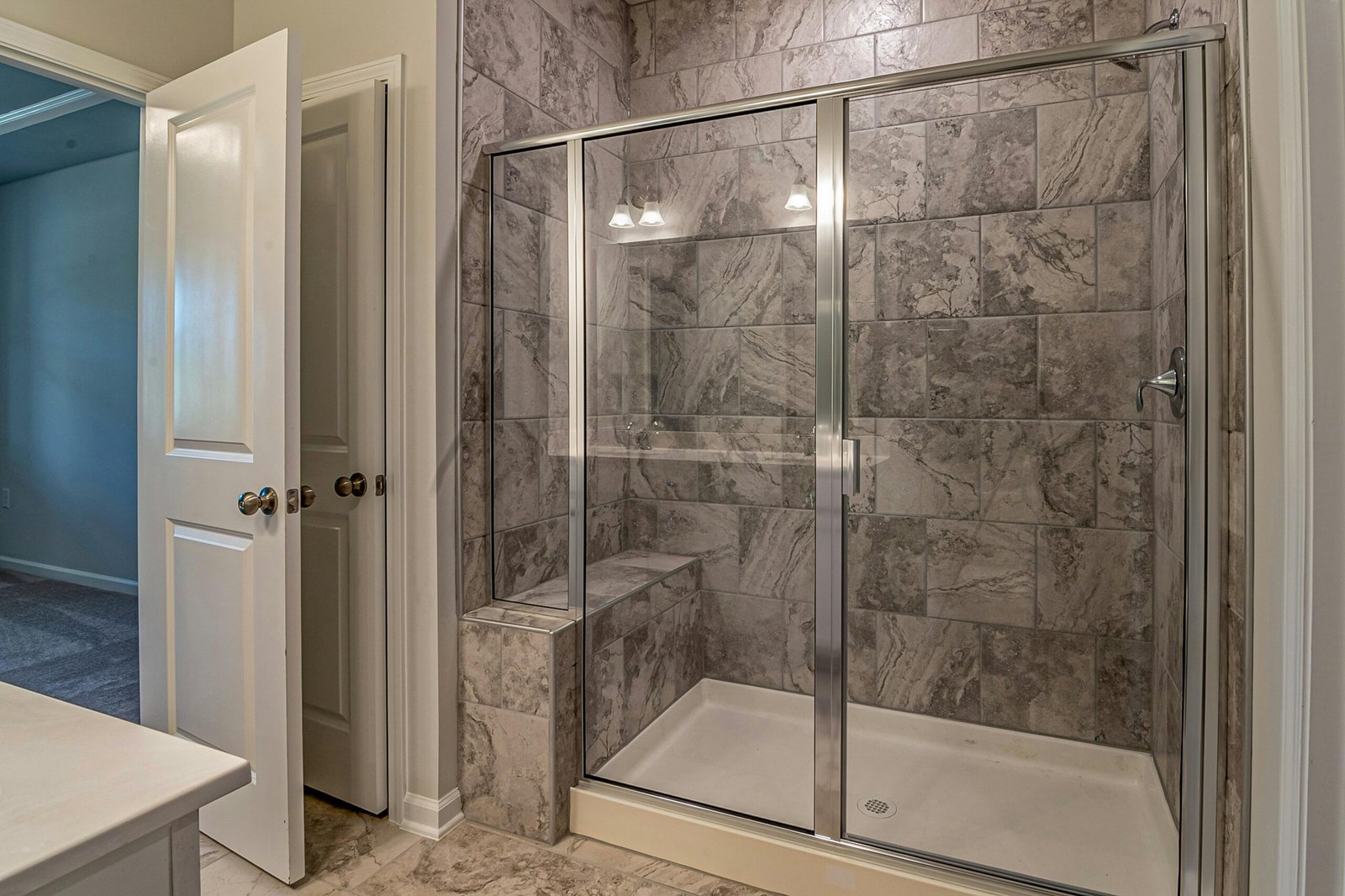
- Waterproofing scope. A walk-in shower waterproofs one zone. A wet room waterproofs the whole room, which raises both the cost and the stakes on quality.
- Space and feel. A wet room makes a small bathroom feel open and luxurious. A glass enclosure keeps water more contained in a large bath.
- Splash control. Wet rooms need smart planning, with the toilet and vanity away from the spray or a single glass panel to shield them.
- Accessibility. Curbless entry makes a wet room ideal for aging in place.
- Cleaning. Fewer grout lines and no door track mean less scrubbing, though the floor near the shower stays damp for a while.
Good to know: California’s plumbing code requires shower floors to slope to the drain at roughly 1/4 to 1/2 inch per foot. That range keeps water moving without making the floor feel uneven underfoot.
Mistakes That Ruin a Wet Room Bathroom
Wet room mistakes are rarely cosmetic. They are structural and expensive to fix:
- Incomplete waterproofing. Water reaches the entire floor, so a partial or sloppy membrane guarantees leaks into the subfloor and the ceiling below.
- The wrong slope. Too little fall leaves standing water, and too much feels awkward to walk on.
- Undersized drainage. A drain that cannot keep up lets water spread during a long shower. A properly sized linear drain solves this.
- Ignoring splash zones. A soaked toilet paper roll and wet vanity are avoidable with one glass panel.
- Hiring the wrong team. A wet room needs a contractor who understands whole-room waterproofing and slope, not one who treats it like a normal shower.
If an older bathroom is already leaking, our guide to water damage behind a shower wall explains the warning signs.
A Contractor’s Perspective
This is the project where the contractor matters more than the tile. A wet room bathroom is mostly engineering and only partly design, and the engineering disappears once the tile goes down, which is exactly why corners get cut.
We build the slope and membrane as if the room will be flooded, because during a long shower, parts of it effectively are. We also plan the layout around water first, keeping the vanity and toilet out of the spray or adding one frameless glass panel to define the shower without closing the room off. And we usually recommend heated floors, because open tile stays damp and a warm floor dries faster and feels better underfoot.
Done right, a wet room is one of the most striking and durable bathrooms you can build. Done wrong, it is one of the most expensive to repair. The difference is in the parts you cannot see. The Tile Council of North America publishes the installation methods professionals follow for these systems.
Wet Room Bathroom FAQs
What is a wet room bathroom?
An open, fully waterproofed bathroom where the shower has no curb or enclosure and the floor slopes to a drain, creating a seamless, spa-like space.
Does the whole bathroom get wet?
The floor near the shower does, by design. Smart layout and an optional glass panel keep the toilet, vanity and storage dry.
Are wet rooms more expensive than a walk-in shower?
Yes, because the entire room is waterproofed and sloped, not just the shower. Expect a meaningful premium for the extra membrane and labor.
Do wet rooms need a permit in LA?
Yes. The plumbing, drainage and waterproofing work needs permits and inspection from LADBS or your city building department, which also protects you at resale.
Can a small bathroom be a wet room?
Yes. Small bathrooms often benefit the most, because removing the enclosure makes the room feel much larger.
Will a wet room add resale value?
Generally yes. A well-built wet room bathroom is a modern, high-end feature with broad appeal, including for buyers planning to age in place.
Final Thoughts
A wet room bathroom is the rare upgrade that is both stunning and practical: open, curbless and spa-like, and one of the most accessible layouts you can build. Everything depends on the waterproofing, slope and drainage you never see. Get those right, plan the layout around water, and a wet room becomes the centerpiece of a modern Los Angeles primary bath for years to come.
If you are considering one, start with a contractor who lives and breathes waterproofing and drainage. Explore our bathroom remodeling services to see how we plan and build them.